
CLAT Previous Year Question Papers PDF - Download PYQ Answer Keys & Sample Paper


The more you sweat in practice, the less you bleed in battle! This saying perfectly sums up the importance of practising with the real exam papers before stepping into the actual CLAT 2026 exam hall. If you’re serious about cracking the Common Law Admission Test and securing a seat at a top National Law University, solving previous year question papers is not negotiable. These papers not only help you understand the exam pattern and CLAT Exam pattern but also boost your confidence and improve your time management skills
This Story also Contains
- CLAT Previous Year Question Papers PDF Download
- How to download CLAT PYQ?
- Benefits of solving CLAT previous year question papers
- CLAT Sample Papers 2026
- CLAT UG Question & Answers 2026
- CLAT 2026 Preparation Tips
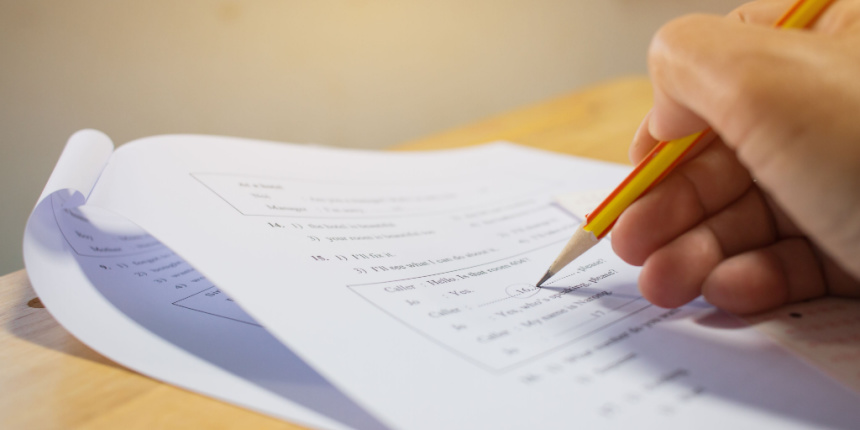
In this article, you can easily download CLAT Previous Year Question Papers in PDF Format along with detailed answer keys and sample papers. Get ready to strengthen your preparation strategy and take one big step closer to your dream law school!
CLAT Previous Year Question Papers PDF Download
Year | Free PDF |
CLAT 2020 Question Paper and Answer Key | |
CLAT 2019 Question Paper and Answer Key | |
CLAT 2018 Question Paper and Answer Key | |
CLAT 2016 Question Paper and Answer Key |
How to download CLAT PYQ?
The CLAT previous year question paper with answer PDF download can be completed by following the steps below:
Click on the CLAT previous year paper link that you want to download.
Students will be redirected to the eBook store of Careers360.
If you are a registered user, log in with your credentials on the login panel that will appear on the screen.
New users will be required to complete their registration by entering basic details like name, mobile number, email etc.
Upon completing the registration, candidates will be directed to the CLAT question paper PDF download.
Next, click on the “Download” button.
The CLAT previous year question paper PDF will be sent to the candidate's registered email address.
Benefits of solving CLAT previous year question papers
Here are some of the advantages of solving CLAT PYQ papers:
Solving previous year CLAT exam papers will boost candidates' confidence in their preparations. The more CLAT previous year papers applicants solve, the more assured they will feel about their preparations.
The CLAT question papers from past years will provide applicants with a comprehensive overview of the CLAT 2026 syllabus. Students will also become acquainted with the CLAT 2026 exam pattern.Candidates can test their knowledge and preparations through these CLAT PYQ papers. Students are advised to carefully analyse their performance after solving these papers.
Students can identify their weak areas after completing the previous year question papers of CLAT. Candidates need to identify the areas and topics from the incorrectly answered questions.
A good way to develop time management skills and accuracy is by practising the CLAT previous year papers PDF. Students will get an idea of the time they take to finish the question papers.
CLAT Sample Papers 2026
Along with the question papers of previous sessions, candidates can also take the help of the CLAT sample papers for previous years to prepare for the exam. The Consortium of NLUs releases a set of sample papers of CLAT to help candidates in their preparation. The download links of CLAT sample papers have been given below:
CLAT Sample Papers for Previous Years
Download link | |
CLAT 2025 Sample Paper | |
CLAT 2017 Sample Paper | |
CLAT 2015 Sample Paper | |
CLAT 2014 Sample Paper | |
CLAT 2013 Sample Paper | |
CLAT 2012 Sample Paper | |
CLAT 2011 Sample Paper | |
CLAT 2010 Sample Paper | |
CLAT 2009 Sample Paper |
CLAT UG Question & Answers 2026
The Aspirants preparing for the CLAT UG 2026 Exam should be well aware of the types of questions asked in the CLAT UG 2026 Exam. Below are the sample questions on the CLAT UG 2026 Exam.
Passage 1:
In August 2025, the Supreme Court issued notice to the Union government on petitions challenging Section 152 of the Bharatiya Nyaya Sanhita (BNS) alleged to be a “re-packaged” sedition provision and clubbed the matter with pending challenges, setting up a wider review of speech-related offences.
Meanwhile, India’s data law moved ahead: the Ministry of Electronics & IT released the Draft Digital Personal Data Protection Rules, 2025 on January 3, 2025, for public consultation (closed on Feb 18), laying the groundwork to operationalise the DPDP Act, 2023, including government-set conditions for cross-border data transfers.
Telecom reforms under the Telecommunications Act, 2023, continued in a phased rollout—key provisions were notified in June–July 2024, with further implementation steps discussed into mid-2025.
At the state level, Uttarakhand’s Uniform Civil Code, 202,4 began implementation in January 2025 and immediately drew multiple writ petitions in the Nainital High Court questioning its constitutionality and specific provisions
Environmental governance also reached the apex court: the Supreme Court accepted petitions challenging proposed boundary changes to the Sariska Tiger Reserve in Rajasthan, with concerns about dilution of Critical Tiger Habitat and knock-on effects like reopening mining activity.
Questions
1) On Section 152 BNS, the Supreme Court has recently:
A. Struck down the provision as unconstitutional
B. Issued notice to the Union and agreed to examine its validity, clubbing it with sedition challenges
C. Upheld the provision after final hearing
D. Referred the matter to a Constitution Bench without notice
Correct answer: B.
Explanation: The Court issued notice on pleas challenging BNS §152 and indicated it would examine its constitutionality alongside pending sedition matters.
2) Which is correct about the DPDP Act’s rule-making in 2025?
A. Rules were finalised in 2023; no consultation occurred in 2025
B. Draft DPDP Rules, 2025 were released on January 3, 2025, for public comments till February 18, 2025
C. Rules permit unrestricted cross-border transfers by default
D. Rules were notified and enforced on Jan 3, 2025
Correct answer: B.
Explanation: MeitY issued draft Rules on Jan 3, 2025, for consultation; cross-border transfers are subject to government-set conditions, not automatic.
3) Regarding implementation of the Telecommunications Act, 2023:
A. The entire Act took effect on January 1, 2023
B. Only spectrum provisions are in force; the rest are stayed
C. Implementation has been phased, with major sections notified in late June and early July 2024, and further rollout discussed into 2025
D. The Act was repealed in 2025
Correct answer: C.
Explanation: Gazette notifications brought substantial parts into force on June 26 and July 5, 2024; authorities indicated continued rollout into 2025.
4) About Uttarakhand’s Uniform Civil Code (UCC):
A. Not implemented; Bill is still pending
B. Implemented in Jan 2025 and faced multiple writ petitions in the Nainital High Court
C. Implemented nationwide by Parliament in 2025
D. Struck down by the Supreme Court in Feb 2025
Correct answer: B.
Explanation: The state began implementing its UCC in late January 2025; several writs challenging provisions were filed in the High Court.
5) The Sariska Tiger Reserve litigation before the Supreme Court primarily concerns:
A. A complete ban on wildlife tourism across India
B. Reducing the reserve to a sanctuary under state law
C. Challenges to boundary alterations and potential dilution of Critical Tiger Habitat, with concerns about reopening mines
D. Relocation of all forest-dwelling communities outside Rajasthan
Correct answer: C.
Explanation: Petitions contest proposed boundary changes that could reduce CTH and enable previously banned mining; the SC has agreed to hear them
Passage 2:
On July 1, 2024, India’s criminal law overhaul took effect: the Bharatiya Nyaya Sanhita (BNS), Bharatiya Nagarik Suraksha Sanhita (BNSS) and Bharatiya Sakshya Adhiniyam (BSA) replaced the IPC, CrPC and Evidence Act. Key shifts include adding specific offences like mob lynching and terrorism under BNS, and replacing the old “sedition” provision with a new offence relating to acts endangering the sovereignty, unity and integrity of India, Section 152 BNS, which is presently under constitutional challenge before the Supreme Court.
BNSS pushes tech-enabled, time-bound procedure: Zero-FIR/e-FIR, electronic summons, mandatory videography, and forensic investigations for offences punishable with 7 years; official guidance also highlights online reporting and specific timelines to speed up trials.
The BSA modernises proof rules for the digital era, strengthening the framework for electronic and digital evidence. Beyond criminal law, on February 15, 2024, the Supreme Court struck down the Electoral Bonds Scheme as unconstitutional for violating voters’ right to information.
The Union government notified the Citizenship (Amendment) Rules, 2024 on March 11, 2024, enabling applications under the CAA; the first citizenship certificates were issued in May 2024. At the state level, Uttarakhand enacted a Uniform Civil Code (UCC) in 2024 covering marriage, separation, succession and allied personal-law matter.s In 2025, authorities also announced an e-Zero FIR mechanism for high-value cyber-fraud, building on BNSS’s digital reporting architecture.
Questions
6) Which of the following pairs is CORRECT as per the passage?
A. BNS — introduces e-FIR and electronic summons
B. BNSS — adds mob lynching as a distinct offence
C. BSA — modernises rules for electronic/digital evidence
D. CAA Rules, 2024 — struck down by the Supreme Court
Answer: C.
Explanation: BSA relates to evidence (including electronic/digital). e-FIR and electronic summons are procedural (BNSS). Mob lynching is a substantive offence under BNS. The Court struck down electoral bonds, not the CAA Rules.
7) What is the present legal status of “Section 152 BNS” as referred to in the passage?
A. In force and upheld as constitutional by the SC
B. Repealed by Parliament
C. Notified but stayed by SC
D. In force but under constitutional challenge before the SC
Answer: D.
Explanation: The passage notes that Section 152 (relating to acts endangering sovereignty, unity and integrity) is currently under constitutional challenge; the SC has issued notice to the Centre.
8) Which development MOST directly strengthens voters’ access to information about political funding?
A. BNSS timelines for investigation and trial
B. SC judgment striking down the Electoral Bonds Scheme
C. Notification of CAA Rules, 2024
D. Uttarakhand’s UCC enactment
Answer: B.
Explanation: The Supreme Court held the Electoral Bonds Scheme unconstitutional for violating voters’ right to information, directly impacting transparency in political funding.
9) Which of the following is a PROCEDURAL reform highlighted in the passage?
A. Creating a distinct offence of mob lynching
B. Recognising digital records as evidence
C. Mandating forensic investigation for serious offences (≥7 years)
D. Enacting a Uniform Civil Code on personal laws
Answer: C.
Explanation: Mandatory forensic investigation and videography are BNSS procedural measures. Mob lynching is substantive (BNS). Digital evidence recognition is under the BSA (law of evidence). UCC concerns state personal-law legislation.
10) Which statement BEST captures the scope of the Citizenship (Amendment) Rules, 2024, mentioned in the passage?
A. They abolish citizenship by registration
B. They operationalise applications under the CAA, with certificates subsequently issued
C. They grant automatic citizenship to all undocumented migrants
D. They were invalidated by the same judgment that struck down electoral bonds
Answer: B.
Explanation: The Rules notified on March 11, 2024, enabled eligible applicants under the CAA to apply; the first certificates followed. No court has struck these Rules down in the passage.
Passage 3:
India’s three new criminal laws—the Bharatiya Nyaya Sanhita (BNS), Bharatiya Nagarik Suraksha Sanhita (BNSS) and Bharatiya Sakshya Adhiniyam (BSA) took effect on July 1, 2024 (with BNS §106(2) on “hit-and-run” kept in abeyance after talks with transport unions). The regime codifies “Zero FIR”, enables e-processes, tightens custody and trial timelines, and replaces IPC sedition with BNS §152, “Acts endangering the sovereignty, unity and integrity of India.” Electronic evidence rules under the BSA formalise hash-value-backed certificates.
In Feb 2024, a Constitution Bench struck down the Electoral Bonds Scheme as unconstitutional for violating citizens’ right to information under Article 19(1)(a), directing SBI to disclose donors/recipients. The Digital Personal Data Protection Act, 2023 (DPDP) was enacted in Aug 2023; draft DPDP Rules were issued on January 3, 2025, for consultation. As of Aug 2025, core provisions remain to be notified for enforcement.
The Telecommunications Act, 2023, repeals vintage telecom statutes; key sections were notified in June–July 2024. TRAI in 2025 recommended terms for satellite spectrum assignments, signalling the coming operational framework. Markets saw continuing governance reforms: SEBI amended several regulations in 2025, including further changes to the LODR Regulations on May 1, 2025.
Uttarakhand notified Uniform Civil Code Rules, 2025 (under its UCC Act, 2024), with express non-applicability to members of Scheduled Tribes and detailed procedures on marriage/partnership registration and succession. Most recently, on August 11, 2025, the Supreme Court ordered the removal and sheltering of stray dogs from public spaces in Delhi-NCR, warning of penal action against obstruction, amid concerns over rabies and public safety.
Questions
11. Under the new criminal-law framework, which pairing is correct?
A. BNS replaces CrPC; BNSS replaces IPC
B. BNS replaces IPC; BNSS replaces CrPC
C. BNSS replaces the Evidence Act; BSA replaces the IPC
D. BSA replaces CrPC; BNS replaces Evidence Act
Answer: B.
Explanation: BNS ↔ IPC; BNSS ↔ CrPC; BSA ↔ Evidence Act.
12. Which statement about hit-and-run (BNS S. 106(2)) is accurate as of Aug 2025?
A. Enforced nationwide since July 1, 2024
B. Struck down by the Supreme Court
C. Kept in abeyance after protests; not in force
D. Applicable only to commercial vehicles
Answer: C.
Explanation: Govt kept S. 106(2) in abeyance after talks with transport unions; other provisions commenced July 1, 2024.
13. Under the BSA, admissibility of electronic evidence now typically requires:
A. Oral confirmation by the IO
B. A hash-value certificate accompanying the record
C. Court-appointed amicus certificate
D. Only metadata printouts
Answer: B.
Explanation: The BSA framework expects hash-value-backed certificates for e-evidence.
14. The Electoral Bonds ruling (Feb 2024) primarily held that the scheme violated:
A. Art. 14 (Equality)
B. Art. 19(1)(a) (Right to information)
C. Art. 21 (Life & liberty)
D. Art. 265 (Taxation)
Answer: B.
Explanation: The Court found non-disclosure of political funding violated citizens’ Art. 19(1)(a) rights; SBI was directed to disclose details.
15. Which is not a BNSS feature highlighted in policy briefs/commentary?
A. “Zero FIR” at any police station
B. Splitting 15 days’ police custody within 40/60 days
C. Mandatory return of sterilised stray dogs to their locality
D. E-processes to speed investigation and trial timelines
Answer: C.
Explanation: C relates to an animal-control dispute; BNSS focuses on zero-FIR, segmented custody, and digital processes.
16. As of Aug 2025, the DPDP Act, 2023 status is best described as:
A. Fully enforced with final Rules since Jan 2025
B. Enacted; draft Rules published Jan 3, 2025; core provisions pending notification
C. Struck down by the SC
D. Applicable only to government entities
Answer: B.
Explanation: Draft Rules issued Jan 3, 2025; several trackers note the Act’s operative provisions await notification.
17. The Telecommunications Act, 2023:
A. Retains the Indian Telegraph Act, 1885
B. Was notified in parts in June–July 2024
C. Applies only to ISPs, not satcom
D. Is a state legislation
Answer: B.
Explanation: Selected provisions were notified effective June 26 and July 5, 2024; they modernise, including satcom aspects.
18. Which recent governance update is correctly matched?
A. SEBI LODR Regulations—last amended May 1, 2025
B. SEBI PIT Regulations—last amended 1999
C. AIF Regulations—repealed in 2025
D. REIT Regulations—repealed in 2024
Answer: A.
Explanation: SEBI’s page shows LODR last amended May 1, 2025 (others remain in force with various recent amendments).
19. The Uttarakhand UCC Rules, 2025, explicitly state that they:
A. Apply only to Hindus
B. Do not apply to members of Scheduled Tribes
C. Apply only in urban local bodies
D. Are advisory, not binding
Answer: B.
Explanation: Rules note non-applicability to Scheduled Tribes as defined under the Constitution.
20. On Aug 11, 2025, the Supreme Court directed that Delhi-NCR stray dogs be:
A. Sterilised and released back to their locality
B. Culled under municipal bye-laws
C. Relocated to shelters; obstruction may invite penal action
D. Left to RWAs to manage
Answer: C.
Explanation: The Court ordered removal to shelters and warned of penal action for obstruction, citing public safety concerns.
CLAT 2026 Preparation Tips
Here are some preparation tips to ace the CLAT exam:
Candidates should draft a clear preparation strategy before starting their preparations. Students must figure out what topics they want to attempt first or how are they going to approach each part of their CLAT preparation.
Students must give special attention to the revision of subjects and topics. It is important that students recollect whatever they have learned during the course of preparation. Students should start early so that they have ample time left for revision in the end.
Candidates are advised to create a study plan and strictly adhere to it. Having a study plan will give students a sense of discipline and consistency in preparation.
Students should practice as many sample papers as possible to get a real-like feel of the exam and understand the paper pattern.
It is important that students take proper breaks during their preparation. Candidates must indulge in their favourite hobbies to avoid any unwanted preparation stress.
Also, check Topics-wise question papers-
Frequently Asked Questions (FAQs)
Yes, CLAT is one of the toughest law entrance exams of India and students must have really good preparation to crack the exam.
Yes, there might be some questions that might be repeated from the previous year question papers of CLAT exam.
A score between 80-90 marks can be termed as a good score in CLAT 2025.
For CLAT preparation, one should solve around as many sample papers and the PYQ as possible. Make this a routine especially in the final days of preparation leading up to the exam date.
There are no pre-specified passing marks for CLAT exam. However, all NLUs and participating colleges release their separate cutoff based on CLAT scores.
Popular Courses and Specializations
Popular Degrees
Browse Law Colleges by State

Questions related to CLAT
On Question asked by student community
hello aspirant,
The secret to passing the exam is consistent practice, which may be achieved by working through sample papers, mock exams, and prior years' CLAT question papers. Practice as much as you can; it will help you feel more confident and more like an actual test. This a very
Hello aspirant,
IF you want to score good marks in CLAT the following a well planned study timetable is a very basic requirement. Along with this you need to highlight your weak areas so that you can focus more on them.
Also try to read english newspaper daily to improve
Hello,
Here are the links where you can get information about CLAT exam and also study material offered by careers360 :
1. CLAT 2025 information and how to prepare :
https://law.careers360.com/articles/how-prepare-for-clat
2. Study material :
- https://law.careers360.com/articles/best-books-for-clat
Hope it helps !
Hello,
Yes, Hindi medium students are eligible to appear for most entrance exams, including those for higher education or competitive exams, provided they meet the other eligibility criteria like educational qualifications. Many exams offer question papers in Hindi, especially for state and national-level exams like UPSC, NEET, JEE, and law
Hey there! Thanks for reaching out to Careers360. Glad to hear you're interested in using our CLAT college predictor too l. It's definitely a handy resource for CLAT aspirants.
To use the predictor, just head over to our website and look for the CLAT section. You'll need to input your